




The Master’s Programme in Geotechnologies for Archaeology is not a second-cycle degree (Master of Science), but a postgraduate course.
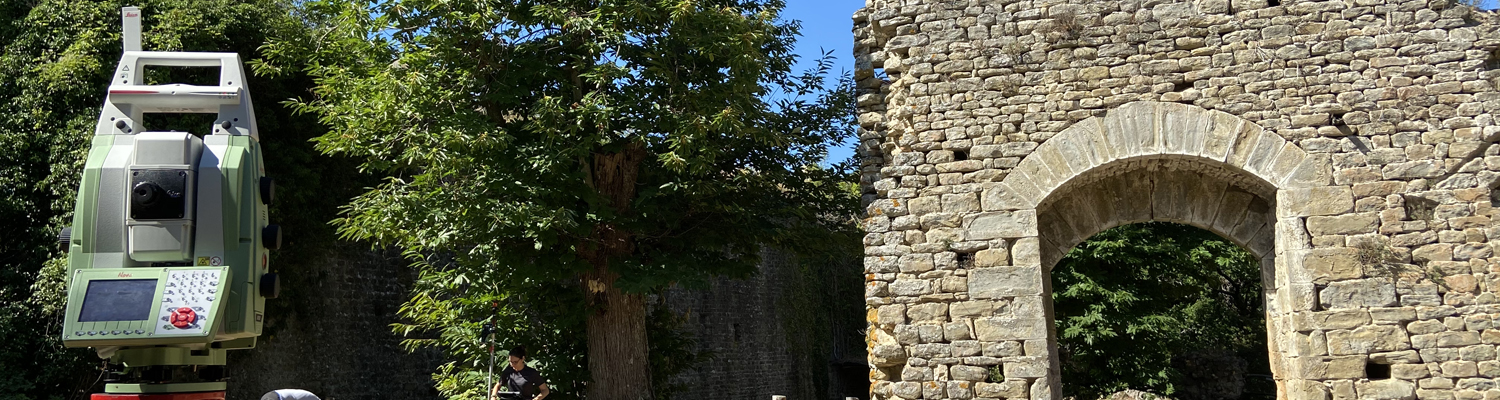
In a national and international context that is increasingly digitized, archaeology also requires professionals capable of integrating traditional humanities skills with advanced technological knowledge. Today, the field demands specific expertise in the use of GIS and GPS, geoprocessing and AI applied to spatial data, remote sensing, aerial and satellite photogrammetry, LiDAR, geophysics, 3D modelling, and advanced surveying techniques.
In parallel, the evolving regulatory framework related to preventive archaeology and archaeological risk management requires professionals able to organize and interpret complex spatial data, produce thematic cartography, develop GIS systems for planning interventions, and apply non-invasive methods for the identification and analysis of archaeological evidence.
In an increasingly competitive job market, archaeologists can no longer rely solely on basic training but must acquire specialized and interdisciplinary skills ranging from archaeological prospection to data analysis and management, as well as dissemination through 3D modelling and innovative digital tools.
- Tuition fee: € 3.800 (payable in two instalments)
- Application deadline: 15 december 2026
- Total hours: 708
- ECTS: 65
- Curricular internship hours: 300
- Duration: january 2027 – january 2028
- Language of instruction: Italian
- Director: Pizziolo Giovanna
- Master details: download more information
- Application tutorial: link
- Application website: link
Who can apply
- For those who wish to acquire professional and operational skills in the field of technologies applied to archaeology;
- For those who wish to develop and establish an archaeology unit within the company or professional practice in which they are already employed;
- For those who hold, or aspire to hold, managerial positions within public administrations (local authorities, chambers of commerce, public agencies, consortia, public companies, presidential institutions, independent authorities, central government administrations).
To enrol in the second-level Master’s Programme in Geotechnologies for Archaeology is required at least a second-cycle degree:
- any italian degree awarded under the regulations prior to d.m. 509/99
- any italian master’s degree under d.m. 509/99 and under d.m. 270/2004
Applicants holding an academic qualification awarded abroad may also enrol, provided that, for enrolment purposes only, the qualification is deemed comparable in terms of level, nature, content and academic rights to the Italian qualification required for admission to the Master’s Programme.
Professional opportunities
Career Opportunities
Employment Opportunities
The professional profile trained through the Master in Geotechnologies for Archaeology may find employment in public institutions such as ministries, superintendencies, local administrations, and research institutes involved in the investigation, protection, and enhancement of archaeological sites. There is also an increasing range of opportunities in private companies operating in civil engineering, landscape architecture, construction firms, and archaeological companies specializing in preventive or rescue archaeology. Archaeological cooperatives are also establishing themselves with growing success in the professional sector, working on projects for the enhancement of archaeological heritage and the assessment of archaeological risk.
Course Structure
RESEARCH METHODS IN ARCHAEOLOGY AND GEOLOGY (64 hours – 8 ECTS)
- Geology and geomorphology (24 hours – 3 ECTS)
- Data acquisition in archaeology (16 hours – 2 ECTS)
- Data management in archaeology (16 hours – 2 ECTS)
- Preventive Archaeology (8 hours – 1 ECTS)
GIS AND CARTOGRAPHY FOR ARCHAEOLOGY (100 hours – 12,5 ECTS)
- GPS (4 hours – 0,5 ECTS)
- Fundamentals of GIS (20 hours – 2,5 ECTS)
- GIS Applications (16 hours – 2 ECTS)
- Geoprocessing and geospatial AI (20 hours – 2,5 ECTS)
- GIS open source (24 hours – 3 ECTS)
- GIS Applications to preventive archaeology (16 hours – 2 ECTS)
3D MODELING AND ARCHEOSEISMOLOGY (64 hours – 8 ECTS)
- Fundamentals of CAD (24 hours – 3 ECTS)
- Archaeological 3D modelling (24 hours – 3 ECTS)
- Survey and archaeoseismology of structures (16 hours – 2 ECTS)
REMOTE SENSING FOR ARCHAEOLOGY (56 hours – 7 ECTS)
- Fundamentals of remote sensing (16 hours – 2 ECTS)
- Practical of remote sensing (16 hours – 2 ECTS)
- AI and remote sensing (8 hours – 1 ECTS)
- Applications of remote sensing in archaeology (8 hours – 1 ECTS)
- Remote sensing exercises applied to archaeological contexts (8 hours – 1 ECTS)
PHOTOGRAMMETRY AND ADVANCED SURVEYING TECHNIQUES (80 hours – 10 ECTS)
- Aerial and satellite photogrammetry (40 hours – 5 ECTS)
- Theoretical and methodological aspects of oblique aerial photography (8 hours – 1 ECTS)
- Aerial and terrestrial LiDAR (32 hours – 4 ECTS)
LANDSCAPE ARCHAEOLOGY AND FIELD SURVEY (44 hours – 5,5 ECTS)
- Landscape archaeology (24 hours – 3 ECTS)
- Geophysics for archaeology (12 hours – 1,5 ECTS)
- Tools and techniques for archaeological contexts (8 hours – 1 ECTS)