




The Master’s Programme in Geomatics is not a second-cycle degree (Master of Science), but a postgraduate course.
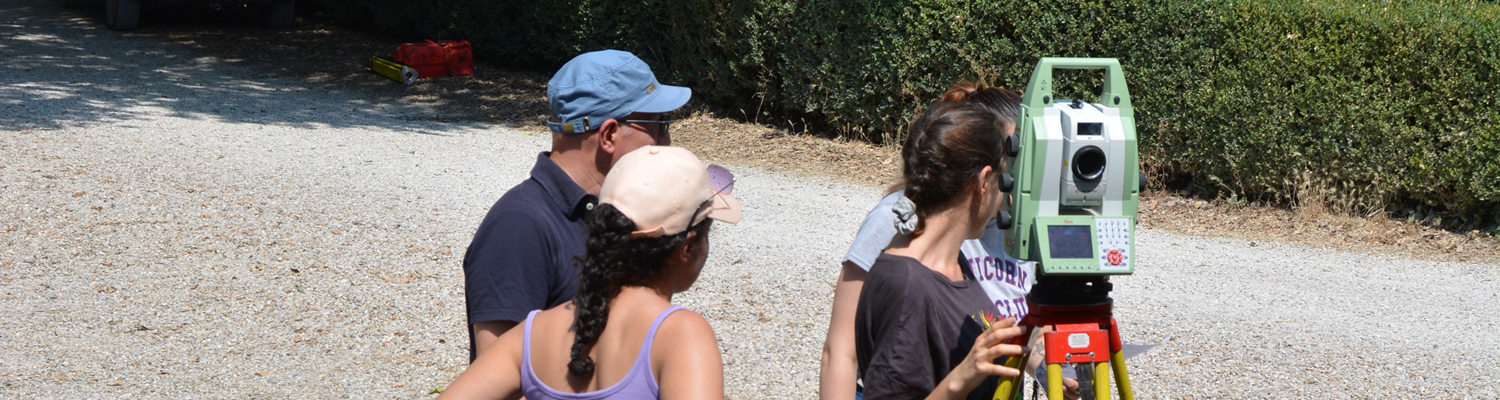
The Geomatics expert has a professional profile oriented toward the development and application of the latest geo-information technologies, capable of carrying out strategic tasks ranging from the design, collection, analysis, management, dissemination, and updating of territorial data. The disciplines used for this purpose include geodesy, topographic surveying, digital cartography, spatial databases, CAD, GIS, spatial analysis and geoprocessing in geo-referenced 2D and 3D environments, geostatistics, remote sensing, aerial, terrestrial and drone-based digital photogrammetry, GPS/GNSS systems, aerial and terrestrial laser scanning, 3D data modeling and editing, BIM, and the publication of web-based cartographic services.
The training program also integrates, starting this year, artificial intelligence and machine learning techniques applied to territorial data, aimed at the automated processing of geospatial data, the development of predictive models, and the advanced analysis of remote sensing images and data, as well as the use of immersive technologies for the representation and use of 3D environments and data.
The Geomatics expert, thanks to the integration of data acquisition systems, geographic information systems, digital cartography, and advanced analysis tools, may find professional opportunities in the fields of agriculture, forestry, geological and environmental sciences, topography and thematic cartography, cultural heritage and archaeology, natural and environmental risk management, urban planning, engineering, media, tourism, and defense.
GEOMATICS – I LEVEL
- Tuition fee: € 3.700 (payable in two instalments)
- Application deadline: 15 december 2026
- Total hours: 788
- ECTS: 75
- Curricular internship hours: 300
- Duration: january 2027 – january 2028
- Language of instruction: Italian
- Director: Salvini Riccardo
- Master details: download more information
- Application tutorial: link
- Application website: link
GEOMATICS – II LEVEL
- Tuition fee: € 3.700 (payable in two instalments)
- Application deadline: 15 december 2026
- Total hours: 772
- ECTS: 73
- Curricular internship hours: 300
- Duration: january 2027 – january 2028
- Language of instruction: Italian
- Director: Salvini Riccardo
- Master details: download more information
- Application tutorial: link
- Application website: link
Who can apply
The programme is intended for those who wish to acquire, develop, or strengthen technical and professional skills within the company or professional practice where they are already employed; for those who hold, or aspire to hold, managerial roles within public administrations; and for those engaged in research who wish to gain new competencies in the subject areas covered by the Master’s programme.
To enrol in the first-level Master’s Programme in Geomatics (GEOM), is required at least a first-cycle degree :
- any italian degree awarded under the regulations prior to d.m. 509/99
- any italian bachelor’s degree classes under d.m. 509/99 and d.m. 270/2004
- any italian master’s degree under d.m. 509/99 and under d.m. 270/2004
- University Diplomas in Industrial Design, Building Engineering, and Territorial Information Systems
To enrol in the second-level Master’s Programme in Geomatics, is required a second-cycle degree:
- any italian degree awarded under the regulations prior to d.m. 509/99
- any italian master’s degree under d.m. 509/99 and under d.m. 270/2004
Applicants holding an academic qualification awarded abroad may also enrol, provided that, for enrolment purposes only, the qualification is deemed comparable in terms of level, nature, content and academic rights to the Italian qualification required for admission to the Master’s Programme.
Professional opportunities
The Master’s Programme in Geomatics aims to provide skills to:
- organise and manage territorial and environmental information using the most advanced information technologies;
- acquire and process remotely sensed data using active and passive sensors from satellites, airborne platforms, and remotely piloted aircraft systems (drones);
- monitor environmental parameters and their changes over time;
- disseminate georeferenced data, including through web-based technologies.
Professional Profile
The professional profile developed by the Master will acquire highly specialised skills in an innovative and continuously evolving field, characterised by strong integration between geospatial technologies, information technology, and territorial data analysis. The Geomatics expert will therefore develop an advanced professional profile related to the use of modern technologies for the acquisition, management, processing, analysis, and dissemination of geographic and territorial data.
The professional fields of application are numerous and include the use of data acquisition systems, geographic information systems, spatial databases, CAD and BIM tools, 3D modelling and visualisation technologies, WebGIS platforms, and web-based cartographic services. The training programme also integrates artificial intelligence and machine learning techniques applied to territorial data, aimed at automating geospatial analysis processes, processing remotely sensed data, developing predictive models, and automatically extracting territorial information. In addition, immersive 3D technologies are introduced for the advanced representation, exploration, and use of digital data and environments.
The skills provided by the Master broaden the application possibilities of geological, agronomic, forestry, engineering, surveying, archaeological, urban planning, and environmental disciplines, facilitating entry into public and private professional contexts that produce, manage, or use geographic information. These include cartographic production companies, environmental research and consulting firms, software companies, organisations operating in the natural resources sector, engineering and territorial services companies, as well as public bodies and research institutions, local authorities, environmental protection agencies (ARPA), cadastral offices, river basin authorities, land reclamation consortia, superintendencies, and museum institutions.
The growing diffusion of geospatial technologies, satellite systems, web platforms, and applications based on artificial intelligence is generating an increasing demand for highly specialised professionals in the management and interpretation of territorial data, both at national and international level. The skills acquired therefore represent a preferential qualification in numerous fields related to land management, environmental risk mitigation, urban and territorial planning, defence, media, tourism, and technological innovation.
Course Structure – I level
Fundamentals of Geodesy and Digital Cartography (76 hours – 9,5 ECTS)
- Introduction to Geomatics (4 hours – 0,5 ECTS)
- Foundamentals of Geoinformatics (12 hours – 1,5 ECTS)
- Fundamentals of Geodesy (8 hours – 1 ECTS)
- Digital Cartography (8 hours – 1 ECTS)
- Applications of Digital Cartography (16 hours – 2 ECTS)
- Satellite Positioning Systems (GPS) (8 hours – 1 ECTS)
- Topographic Survey (20 hours – 2,5 ECTS)
Spatial Databases, AI programming, and WebGIS (96 hours – 12 ECTS)
- Fundamentals of Spatial Databases (32 hours – 4 ECTS)
- Applications of Spatial Databases (24 hours – 3 ECTS)
- AI Programming: Machine Learning models (16 hours – 2 ECTS)
- WebGIS (24 hours – 3 ECTS)
GIS and AI applications (100 hours – 12,5 ECTS)
- Fundamentals of GIS (20 hours – 2,5 ECTS)
- Applications of GIS (16 hours – 2 ECTS)
- Geoprocessing and Geospatial AI (2o hours – 2,5 ECTS)
- 3D GIS (20 hours – 2,5 ECTS)
- Geostatistics (24 hours – 3 ECTS)
Remote Sensing, Photogrammetry, and LiDAR (136 hours – 17 ECTS)
- Fundamentals of Remote Sensing (16 hours – 2 ECTS)
- Practicals of Remote Sensing (16 hours – 2 ECTS)
- AI and Remote Sensing (8 hours – 1 ECTS)
- Aerial and Satellite Photogrammetry (40 hours – 5 ECTS)
- Drone-Based Photogrammetry (24 hours – 3 ECTS)
- Aerial LiDAR (8 hours – 1 ECTS)
- Terrestrial LiDAR (24 hours – 3 ECTS)
CAD, BIM and 3D Modeling (80 hours – 10 ECTS)
- Fundamentals of CAD (24 hours – 3 ECTS)
- Fundamentals of Building Information Modeling (8 hours – 1 ECTS)
- Applications of Building Information Modeling (16 hours – 2 ECTS)
- Fundamentals of 3D Editing (12 hours – 1,5 ECTS)
- 3D Digital Creation: Editing and Immersive Technologies (20 hours – 2,5 ECTS)
Course Structure – II level
Fundamentals of Geodesy and Digital Cartography (60 hours – 7,5 ECTS)
- Fundamentals of Geodesy (8 hours – 1 ECTS)
- Digital Cartography (8 hours – 1 ECTS)
- Applications of Digital Cartography (16 hours – 2 ECTS)
- Satellite Positioning Systems (GPS) (8 hours – 1 ECTS)
- Topographic Survey (20 hours – 2,5 ECTS)
Spatial Databases, AI programming, and WebGIS (96 hours – 12 ECTS)
- Fundamentals of Spatial Databases (32 hours – 4 ECTS)
- Applications of Spatial Databases (24 hours – 3 ECTS)
- AI Programming: Machine Learning models (16 hours – 2 ECTS)
- WebGIS (24 hours – 3 ECTS)
GIS and AI applications (100 hours – 12,5 ECTS)
- Fundamentals of GIS (20 hours – 2,5 ECTS)
- Applications of GIS (16 hours – 2 ECTS)
- Geoprocessing and Geospatial AI (2o hours – 2,5 ECTS)
- 3D GIS (20 hours – 2,5 ECTS)
- Geostatistics (24 hours – 3 ECTS)
Remote Sensing, Photogrammetry, and LiDAR (136 hours – 17 ECTS)
- Fundamentals of Remote Sensing (16 hours – 2 ECTS)
- Practicals of Remote Sensing (16 hours – 2 ECTS)
- AI and Remote Sensing (8 hours – 1 ECTS)
- Aerial and Satellite Photogrammetry (40 hours – 5 ECTS)
- Drone-Based Photogrammetry (24 hours – 3 ECTS)
- Aerial LiDAR (8 hours – 1 ECTS)
- Terrestrial LiDAR (24 hours – 3 ECTS)
CAD, BIM and 3D Modeling (80 hours – 10 ECTS)
- Fundamentals of CAD (24 hours – 3 ECTS)
- Fundamentals of Building Information Modeling (8 hours – 1 ECTS)
- Applications of Building Information Modeling (16 hours – 2 ECTS)
- Fundamentals of 3D Editing (12 hours – 1,5 ECTS)
- 3D Digital Creation: Editing and Immersive Technologies (20 hours – 2,5 ECTS)